
AHK-Cu vs. GHK-Cu: Decoding Molecular Differences for Lab Research & Advanced Biohacking

Disclaimer: The information provided in this article is for educational, informational, and analytical purposes only. The peptides discussed, including AHK-Cu and GHK-Cu, are strictly intended for laboratory research, in vitro diagnostics, and qualified scientific investigation. They are not approved by the FDA for human consumption, clinical use, diagnosis, or the treatment of any disease.
Table of Contents
- 1. Quick Answer: AHK-Cu vs GHK-Cu
- 2. Introduction to Copper Tripeptides in Regenerative Medicine
- 3. The Biochemical Foundation: GHK-Cu Deep Dive
- 4. The Biochemical Foundation: AHK-Cu Deep Dive
- 5. AHK-Cu vs GHK-Cu: Molecular Differences & Binding Affinity
- 6. Clinical Data and Lab Research Applications (B2B Focus)
- 7. Advanced Biohacking Protocols (B2C Focus)
- 8. Formulation, Stability, and Storage Guidelines
- 9. Safety, Side Effects, and Contraindications
- 10. Sourcing, Purity, and Synthesis Standards
- 11. Frequently Asked Questions (FAQs)
- 12. Key Takeaways
1. Quick Answer: AHK-Cu vs GHK-Cu
When evaluating ahk cu vs ghk cu, the core difference is their biological targeting. GHK-Cu acts as a systemic modulator, upregulating collagen synthesis and global tissue repair pathways. Conversely, AHK-Cu replaces glycine with alanine, restricting its systemic range but giving it a highly specific, localized affinity for stimulating scalp dermal papilla cells and accelerating hair follicle growth.
2. Introduction to Copper Tripeptides in Regenerative Medicine
To fully grasp the therapeutic and regenerative potential of copper tripeptides, one must first understand the foundational biochemistry of how the human body utilizes transitional metals. Copper peptides are not simply inert building blocks; they are highly dynamic, pleiotropic signaling molecules that govern everything from wound healing to cellular senescence.
The Role of Copper in Human Biology
Mechanistically speaking, copper ($Cu^{2+}$) is an essential trace element and a critical cofactor for numerous cuproenzymes that regulate energy production, oxidative stress defense, and connective tissue formation. Free, unbound copper is highly reactive and inherently toxic to cells due to its propensity to trigger Fenton reactions—a process that generates damaging hydroxyl radicals. Therefore, the body relies on specialized chaperone proteins to bind and transport copper safely.
When safely bound, copper acts as the catalytic engine for essential enzymes like cytochrome c oxidase (crucial for ATP production in mitochondria), superoxide dismutase (the body’s primary intracellular antioxidant), and lysyl oxidase (the enzyme responsible for cross-linking collagen and elastin in the extracellular matrix). Without properly transported copper, cellular regeneration stalls, and tissue architecture degrades.
How Peptides Act as Cellular Signaling Molecules
Peptides are short chains of amino acids linked by peptide bonds. In the context of regenerative medicine, specific peptide sequences act as delivery vectors and signaling keys. They do not merely “feed” the tissue; they dock with cell surface receptors and initiate complex intracellular signaling cascades.
Tripeptides like GHK and AHK have an exceptionally high binding affinity for $Cu^{2+}$ ions. By chelating the copper ion, these peptides form a stable, bioavailable complex. Once this complex reaches a target cell—such as a dermal fibroblast or a dermal papilla cell in a hair follicle—it donates the copper directly into the cellular machinery while the peptide sequence itself modulates gene expression, upregulating regenerative pathways and suppressing inflammatory cytokines.
The Evolution from Discovery to Advanced Biohacking
The journey of copper tripeptides began in 1973 when Dr. Loren Pickart isolated GHK-Cu from human plasma. He observed a fascinating phenomenon: when liver cells from elderly patients were exposed to GHK-Cu, they began functioning with the vigor and enzymatic output of cells from much younger individuals.
For decades, the applications of these molecules were confined to high-level clinical research and wound-healing topicals. However, with the advent of advanced biohacking, precise peptide synthesis has become more accessible. Today, researchers and biohackers are moving beyond broad-spectrum applications, utilizing precise molecular variations—like swapping a single amino acid to create AHK-Cu—to bio-target specific tissues with laser precision.
3. The Biochemical Foundation: GHK-Cu Deep Dive
GHK-Cu is arguably the most extensively researched and well-documented copper peptide in modern biochemistry. It is the endogenous (naturally occurring) “gold standard” for systemic tissue repair and cellular reset.
Sequence Breakdown (Glycyl-L-Histidyl-L-Lysine)
The GHK sequence is composed of three amino acids: Glycine, Histidine, and Lysine. Structurally, the glycine residue at the N-terminus is the smallest of all amino acids, consisting of just a single hydrogen atom for its side chain. This lack of steric hindrance allows the GHK molecule to be incredibly flexible.
When the $Cu^{2+}$ ion binds to the GHK sequence, it forms a square-planar coordination complex involving the nitrogen atom of the alpha-amino group of glycine, the deprotonated amide nitrogen of the glycine-histidine peptide bond, and the imidazole nitrogen of the histidine side chain. This compact, flexible geometry allows GHK-Cu to readily navigate the extracellular matrix and interact with a vast array of cell types across the human body.
Primary Mechanisms of Action (Gene up/down-regulation)
What makes GHK-Cu revolutionary is not just its ability to deliver copper, but its profound capacity for epigenetic modulation. Microarray analysis from the Broad Institute reveals that GHK-Cu has the ability to upregulate or downregulate over 4,000 human genes, essentially resetting the cellular genome to a healthier, more youthful state.
Mechanistically, GHK-Cu strongly upregulates the production of Type I and Type III collagen, elastin, and vital proteoglycans like decorin. Simultaneously, it exerts powerful anti-inflammatory effects by downregulating the expression of pro-inflammatory cytokines such as TGF-$\beta1$ and TNF-$\alpha$. Furthermore, it activates the ubiquitin-proteasome system, accelerating the clearance of damaged, oxidized proteins from within the cell.
Systemic Benefits: Tissue Repair and Systemic Inflammation Reduction
Due to its broad receptor affinity and endogenous origins, GHK-Cu acts as a systemic healer. In clinical research and biohacking protocols, it is leveraged for global tissue remodeling. When administered systemically (often via subcutaneous injection in advanced protocols), it targets areas of active inflammation and tissue damage.
Its systemic benefits include accelerated wound contraction, enhanced angiogenesis (the formation of new blood vessels from pre-existing vessels), improved bone density repair, and the rapid healing of gastric ulcers and connective tissue lesions. Because it mitigates systemic inflammation, it is highly prized in biohacking communities for accelerated recovery from intense physical training and injury.
4. The Biochemical Foundation: AHK-Cu Deep Dive
While GHK-Cu is the master regulator of systemic health, AHK-Cu is a specialized, synthesized derivative designed for an entirely different mission. By altering just one amino acid in the sequence, biochemists dramatically shifted the molecule’s biological behavior.
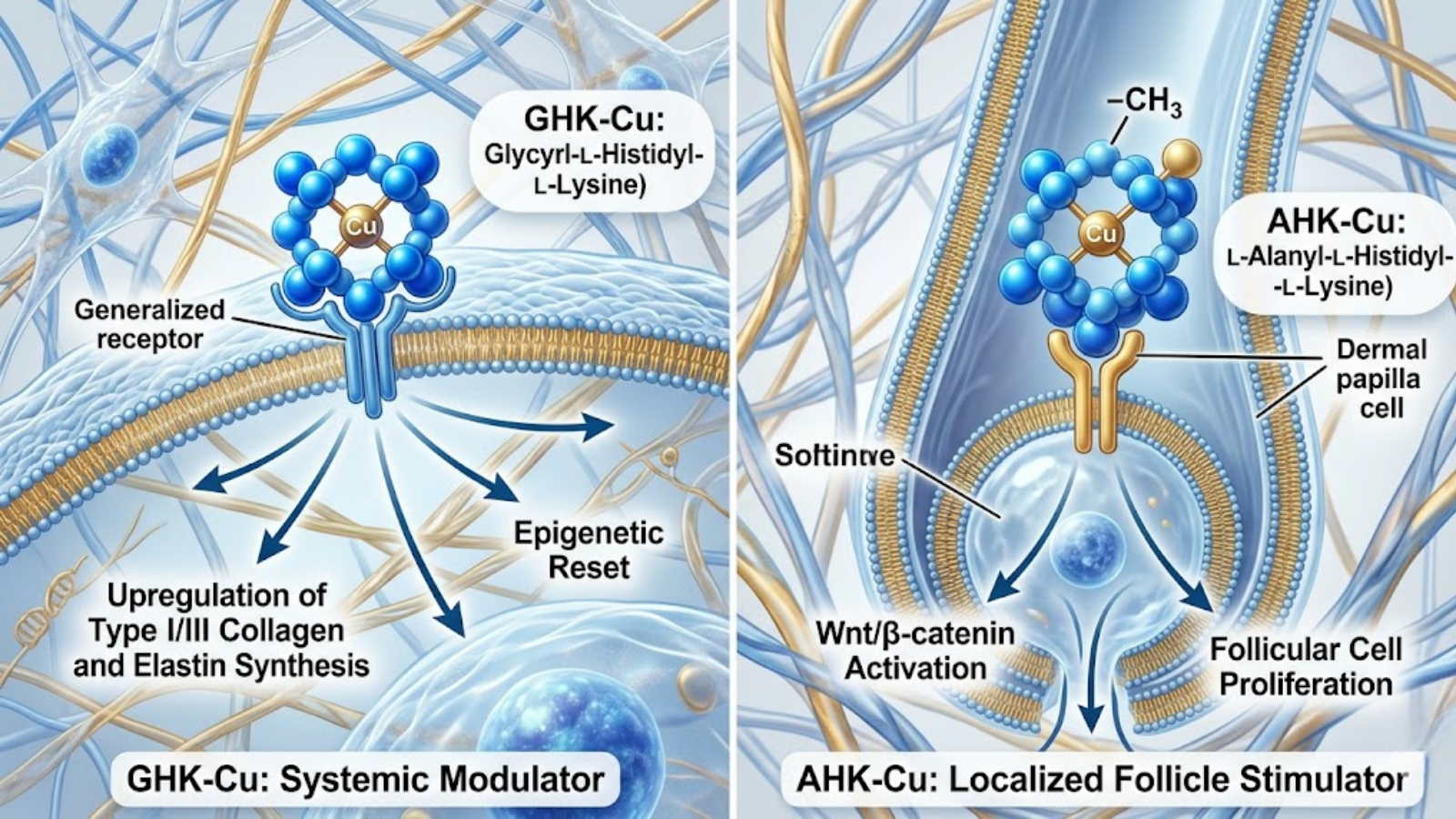
Fig 1: Conceptual molecular mechanism comparing the structures of GHK-Cu and AHK-Cu complexes.
Sequence Breakdown (L-Alanyl-L-Histidyl-L-Lysine)
The AHK-Cu sequence replaces the initial Glycine residue with Alanine. While this seems like a minor shift, in the realm of biochemistry, structure dictates function. Alanine differs from glycine by the presence of a methyl group ($-CH_3$) as its side chain.
This added methyl group introduces a critical element of steric hindrance (spatial blocking). The AHK-Cu complex is structurally bulkier and less flexible than GHK-Cu. Consequently, this changes the three-dimensional conformation of the peptide-copper complex, altering how it docks with cellular receptors.
The Alanine Substitution: Why it Changes Cellular Targeting
Because of its altered geometry, AHK-Cu loses much of the broad, systemic receptor affinity seen with GHK-Cu. However, what it loses in systemic reach, it gains in localized specificity. The AHK-Cu conformation possesses a remarkably high binding affinity for specific receptors located on dermal fibroblasts and, most importantly, the dermal papilla cells located at the base of hair follicles.
In the laboratory, the alanine substitution essentially acts as a localized “zip code,” instructing the copper payload to preferentially target the scalp and skin rather than circulating globally to repair muscles or organs.
Localized Benefits: Dermal Fibroblasts and Hair Follicle Stimulation
In clinical in vitro models, AHK-Cu has proven to be a potent stimulator of follicular proliferation. The hair growth cycle is dictated heavily by the health and signaling of dermal papilla cells. AHK-Cu protects these cells from apoptosis (programmed cell death) induced by oxidative stress and androgenic factors (like DHT).
Furthermore, AHK-Cu upregulates the expression of Vascular Endothelial Growth Factor (VEGF) specifically within the scalp. VEGF is a signaling protein that stimulates the formation of micro-capillaries around the hair follicle, massively increasing blood flow, oxygen, and nutrient delivery to the hair root. Simultaneously, AHK-Cu elongates the anagen (growth) phase of the hair follicle while shortening the telogen (resting) phase, making it a premier compound in biohacking formulations for reversing alopecia and increasing hair shaft thickness.
5. AHK-Cu vs GHK-Cu: Molecular Differences & Binding Affinity
For laboratory researchers scaling formulations, or biohackers optimizing their administration protocols, understanding the granular data separating ahk cu vs ghk cu is paramount. Below is a deep comparative analysis of their pharmacodynamics.
Copper Binding Constants and Receptor Affinity
The stability of a peptide-copper complex is quantified by its binding affinity constant (Log K). A higher Log K value indicates a tighter, more stable bond between the peptide sequence and the copper ion.
GHK possesses a remarkably high affinity for $Cu^{2+}$, with a thermodynamic stability constant (Log K) of approximately 16.44. This exceptionally tight bond ensures that the copper is not prematurely released into the bloodstream, where it could cause oxidative damage.
AHK also exhibits a strong binding affinity for $Cu^{2+}$, but the inclusion of the methyl group slightly distorts the ideal square-planar geometry of the copper complex. As a result, its binding dynamics differ slightly, optimizing it for release in the microenvironment of the dermis and scalp tissue rather than maintaining systemic stability over long circulatory half-lives.
Molecular Weight and Tissue Penetration
Molecular weight directly influences how a compound penetrates tissue barriers, particularly the stratum corneum of the skin.
- GHK-Cu Molecular Weight: ~404 g/mol (including the copper ion)
- AHK-Cu Molecular Weight: ~418 g/mol (including the copper ion)
Both molecules fall well below the “500 Dalton rule,” a pharmacological baseline stating that molecules under 500 Daltons can successfully penetrate the epidermal barrier. However, because GHK-Cu is slightly smaller and more flexible, it navigates systemic circulation and dense extracellular matrices more efficiently. AHK-Cu’s slightly heavier and bulkier structure is perfectly suited for topical scalp serums, where it can lodge into follicular pores and exert localized effects without being rapidly swept into systemic circulation.
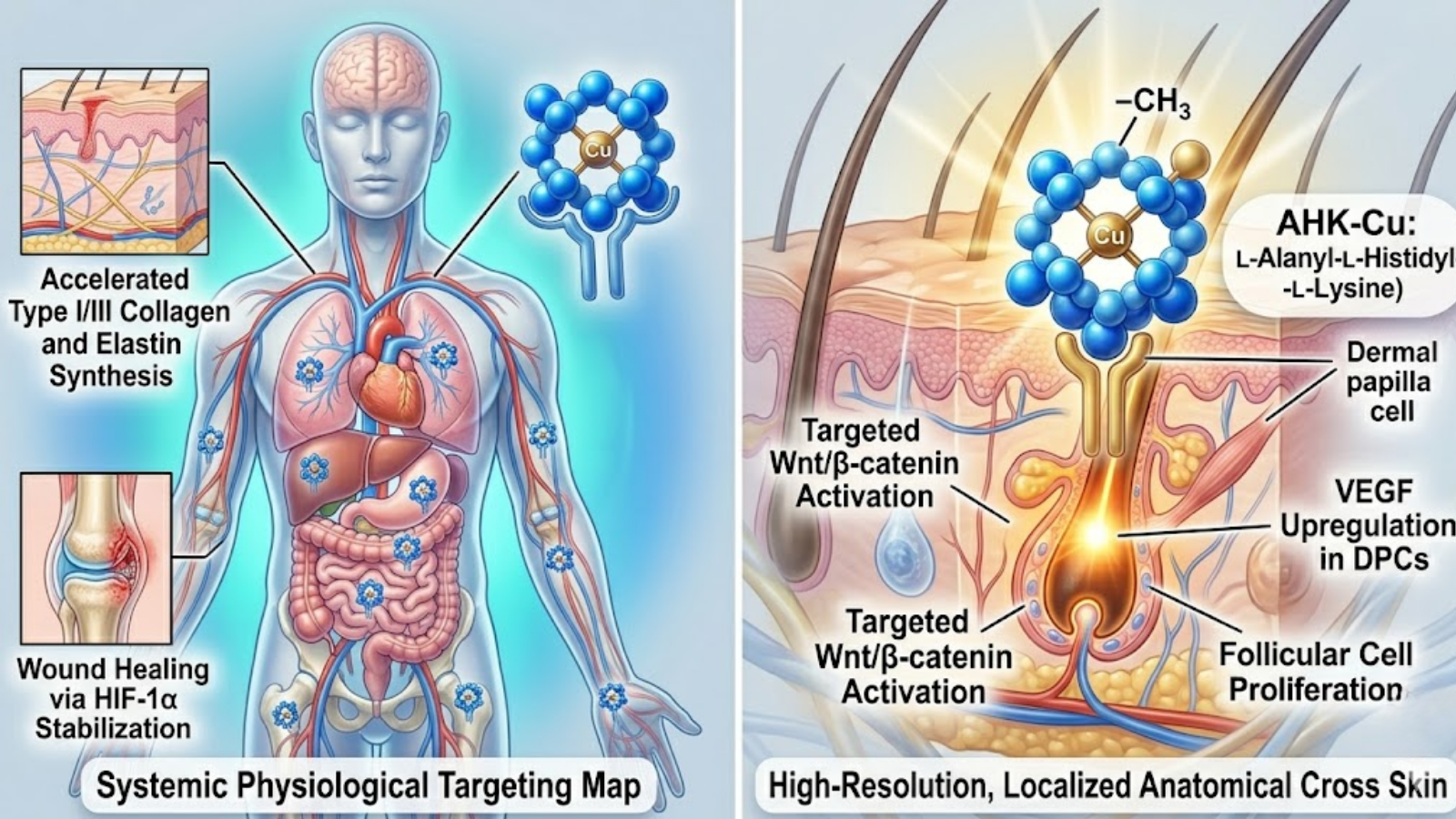
Fig 2: Physiological targeting map. GHK-Cu functions broadly for systemic connective tissue repair, while AHK-Cu precisely targets dermal papilla cells.
Systemic vs. Localized Efficacy Matrix
To clearly delineate the clinical applications and target audiences for these two molecules, refer to the comparative matrix below.
| Feature / Mechanism | GHK-Cu (Glycyl-L-Histidyl-L-Lysine) | AHK-Cu (L-Alanyl-L-Histidyl-L-Lysine) |
|---|---|---|
| Primary Structural Difference | Flexible Glycine residue | Bulkier Alanine residue (Methyl group) |
| Biological Targeting | Broad, Systemic | Highly Localized (Scalp / Skin) |
| Primary Clinical Application | Wound healing, ulcer repair, systemic anti-aging, tendon/muscle repair. | Alopecia reversal, dermal fibroblast stimulation, localized anti-aging. |
| Gene Modulation Profile | Upregulates Type I/III collagen, downregulates TGF-$\beta1$ globally. | Upregulates VEGF in dermal papilla, inhibits follicular apoptosis. |
| Preferred Administration | Subcutaneous injection (advanced protocols) or systemic topical creams. | Topical scalp serums, localized cosmetic skin formulations. |
| Binding Dynamics | High circulatory stability; navigates dense tissue matrices efficiently. | Optimized for localized release in the dermal microenvironment. |
6. Clinical Data and Lab Research Applications (B2B Focus)
For wholesale suppliers, laboratory directors, and clinical researchers, the distinction between ahk cu vs ghk cu dictates trial design and product formulation. The body of in vitro and in vivo data highlights highly divergent pathways of cellular modulation.
In Vitro Wound Healing and Angiogenesis (GHK-Cu studies)
The clinical data supporting GHK-Cu is deeply rooted in its capacity to accelerate wound healing, particularly in compromised environments like diabetic ulcers or irradiated tissue. In laboratory settings, GHK-Cu demonstrates a profound ability to shift macrophage polarization from the pro-inflammatory M1 phenotype to the tissue-repairing M2 phenotype.
Furthermore, GHK-Cu is a potent driver of angiogenesis. It achieves this by stabilizing Hypoxia-Inducible Factor 1-alpha (HIF-1$\alpha$), a transcription factor that upregulates the expression of Vascular Endothelial Growth Factor (VEGF) and basic Fibroblast Growth Factor (bFGF) at the site of tissue injury. In petri dish assays, fibroblasts treated with GHK-Cu exhibit vastly accelerated migration rates across “scratch tests” (in vitro wound models), while simultaneously secreting heavily organized, cross-linked Type I collagen networks rather than chaotic scar tissue.
Alopecia and Follicular Cell Proliferation (AHK-Cu studies)
While GHK-Cu excels in macro-tissue repair, AHK-Cu dominates in the microenvironment of the hair follicle. Clinical interest in AHK-Cu surged when studies revealed its precise interaction with dermal papilla cells (DPCs), the mesenchymal cells that regulate the hair growth cycle.
In vitro research indicates that AHK-Cu stimulates the Wnt/$\beta$-catenin signaling pathway within DPCs. This pathway is the master regulator of follicular morphogenesis and the transition from the telogen (resting) phase to the anagen (growth) phase. Furthermore, AHK-Cu actively suppresses the production of Transforming Growth Factor-beta 1 (TGF-$\beta1$) within the scalp. Because elevated TGF-$\beta1$ is a known trigger for androgenic alopecia (pattern baldness) and follicular miniaturization, AHK-Cu effectively shields the follicle from structurally degrading while simultaneously driving cellular proliferation.
Current Frontiers in Medical Research and Clinical Trials
Modern clinical investigations are currently evaluating GHK-Cu as an adjunctive treatment for chronic obstructive pulmonary disease (COPD) and acute lung injury, given its ability to downregulate pro-inflammatory cytokines and halt lung fibroblast senescence. Conversely, AHK-Cu is the focal point of advanced cosmetic biochemistry, heavily researched by dermatological formulators seeking to create localized serums that bypass the need for systemic anti-androgens (like Finasteride) in treating alopecia.
7. Advanced Biohacking Protocols (B2C Focus)
For the advanced biohacker, theoretical biochemistry must translate into actionable, highly structured protocols. Choosing between these peptides requires a clear assessment of your primary biological objective.

Fig 3: Professional biohacking flat lay featuring lyophilized peptides, bacteriostatic water, and vital mineral balancers.
Assessing Your Goal: Hair Growth vs. Systemic Anti-Aging
The golden rule of peptide biohacking is specificity. If your primary goal is reversing joint degradation, accelerating recovery from skeletal muscle injury, or achieving systemic skin rejuvenation (reducing global wrinkles and improving skin laxity), GHK-Cu is the absolute necessity. If your singular goal is halting hair shedding, thickening the hair shaft, and stimulating dormant follicles, AHK-Cu is the molecular tool of choice.
GHK-Cu Protocols: Dosing, Cycles, and Administration Routes
For systemic repair, biohackers generally rely on subcutaneous injections of lyophilized GHK-Cu reconstituted with bacteriostatic water.
- Standard Subcutaneous Dosage: Biohacking consensus typically lands between 1.5mg to 2mg injected subcutaneously per day.
- Cycle Duration: To prevent copper toxicity and zinc depletion, protocols are strictly cycled. A standard cycle runs for 4 to 6 weeks, followed by an equidistant “washout” period (4 to 6 weeks off).
- Topical Application: For localized facial anti-aging, GHK-Cu is heavily utilized in cosmetic creams at concentrations ranging from 1% to 3%.
AHK-Cu Protocols: Topical Application Rates for Scalp and Skin
Because AHK-Cu is utilized for its localized dermal affinity, it is rarely injected systemically. Instead, it is formulated into topical scalp serums and localized microneedling protocols.
- Scalp Serums: AHK-Cu is optimally applied as a topical liquid or foam at a concentration of 2% to 5%, massaged directly into the scalp daily after showering, when the stratum corneum is highly permeable.
- Microneedling Synergy: Advanced protocols involve applying a sterile AHK-Cu solution immediately following a micro-needling session (using a 1.0mm to 1.5mm dermastamp) to mechanically bypass the epidermal barrier and deliver the peptide directly into the dermal papilla.
The Synergistic Stack: Can You Use Them Together?
A frequent question when comparing ahk cu vs ghk cu is whether they can be stacked. The answer is yes, provided the administration routes remain distinct. A highly optimized biohacking protocol often involves systemic subcutaneous injections of GHK-Cu (for global anti-aging and tissue repair) run concurrently with a daily topical scalp application of AHK-Cu (for targeted hair restoration). They will not compete for the same localized receptors when administered via different vectors.
8. Formulation, Stability, and Storage Guidelines
Peptides are notoriously fragile macromolecules. Improper handling, incorrect math during reconstitution, or poor storage will rapidly denature the amino acid sequence, rendering the compound inert.
Reconstitution Mathematics (Bacteriostatic Water ratios)
For researchers utilizing lyophilized (freeze-dried) powder, reconstitution must be precise to calculate exact microgram ($\mu$g) or milligram (mg) dosing. Reconstitution utilizes Bacteriostatic Water (water containing 0.9% benzyl alcohol) to prevent microbial growth.
Using the standard concentration formula $C = \frac{m}{V}$ (where $C$ is concentration, $m$ is mass, and $V$ is volume):
If you have a 50mg vial of GHK-Cu and add 5mL of Bacteriostatic Water, your resulting concentration is 10mg/mL. Therefore, a 0.2mL draw on an insulin syringe delivers a precise 2mg dose.
Lyophilized Powder Stability: Temperature and Light Sensitivity
In its lyophilized powder form, copper peptides are relatively stable. However, they must be protected from ultraviolet (UV) light and severe thermal fluctuation. Unreconstituted powder should be stored in a freezer at $-20^\circ\text{C}$ ($-4^\circ\text{F}$) for long-term storage (up to 24 months). For short-term storage (under 60 days), a standard refrigerator at $4^\circ\text{C}$ is sufficient.
Degradation Timelines: Liquid vs. Powder Form
The introduction of a solvent triggers the biological clock of the peptide. Once reconstituted, hydrolysis begins slowly degrading the peptide bonds. Reconstituted GHK-Cu or AHK-Cu must be kept refrigerated at all times and should be utilized within 30 to 45 days. Formulators creating topical serums must include specific preservatives and maintain a strict pH balance (typically between 5.5 and 7.0) to prevent the copper ion from dissociating from the peptide sequence prematurely.
9. Safety, Side Effects, and Contraindications
While naturally occurring and generally well-tolerated, exogenous peptide administration carries inherent biological risks that must be heavily mitigated.
The Risk of Copper Toxicity and “Copper Dumping”
The most significant risk of systemic GHK-Cu administration is copper accumulation. The body tightly regulates serum copper levels via the protein ceruloplasmin. Exceeding recommended dosages or running continuous, uncycled protocols can overwhelm this transport system, leading to heavy metal toxicity. Symptoms include chronic fatigue, severe neurological brain fog, gastrointestinal distress, and joint aching.
Zinc Depletion: The Importance of Mineral Balancing
Copper and zinc operate on an inverse biological seesaw; they compete for the same intestinal absorption pathways and utilize the same cellular binding proteins, notably metallothionein. Introducing high levels of exogenous copper via peptides will inevitably deplete intracellular zinc levels. Advanced biohackers uniformly supplement with 30mg to 50mg of bioavailable zinc (such as zinc picolinate or zinc bisglycinate) daily while running a GHK-Cu cycle to maintain this critical mineral equilibrium.
Injection Site Reactions and Histamine Responses
A uniquely common side effect of subcutaneous GHK-Cu injection is post-injection site pain (PIP). Copper is inherently irritating to subcutaneous fat and dermal tissue. Injections often result in localized erythema (redness), swelling, and a stinging sensation that can last for several hours. This is largely due to localized mast cell degranulation and histamine release. Researchers often mitigate this by diluting the injection with additional bacteriostatic water or administering alongside BPC-157 to blunt the localized inflammatory response.
Contraindications (Who should avoid copper peptides entirely)
Individuals with Wilson’s Disease (a rare genetic disorder that causes copper to accumulate in the liver, brain, and other vital organs) must strictly avoid all copper peptides. Furthermore, individuals with active, unmanaged autoimmune conditions, or those undergoing active oncology treatments, should avoid exogenous growth factors and regenerative peptides due to the unpredictable nature of cellular proliferation pathways.
10. Sourcing, Purity, and Synthesis Standards (B2B/B2C Buyer’s Guide)
The unregulated nature of the “research chemical” market means that B2B wholesalers and B2C biohackers alike must act as their own strict quality control agents.
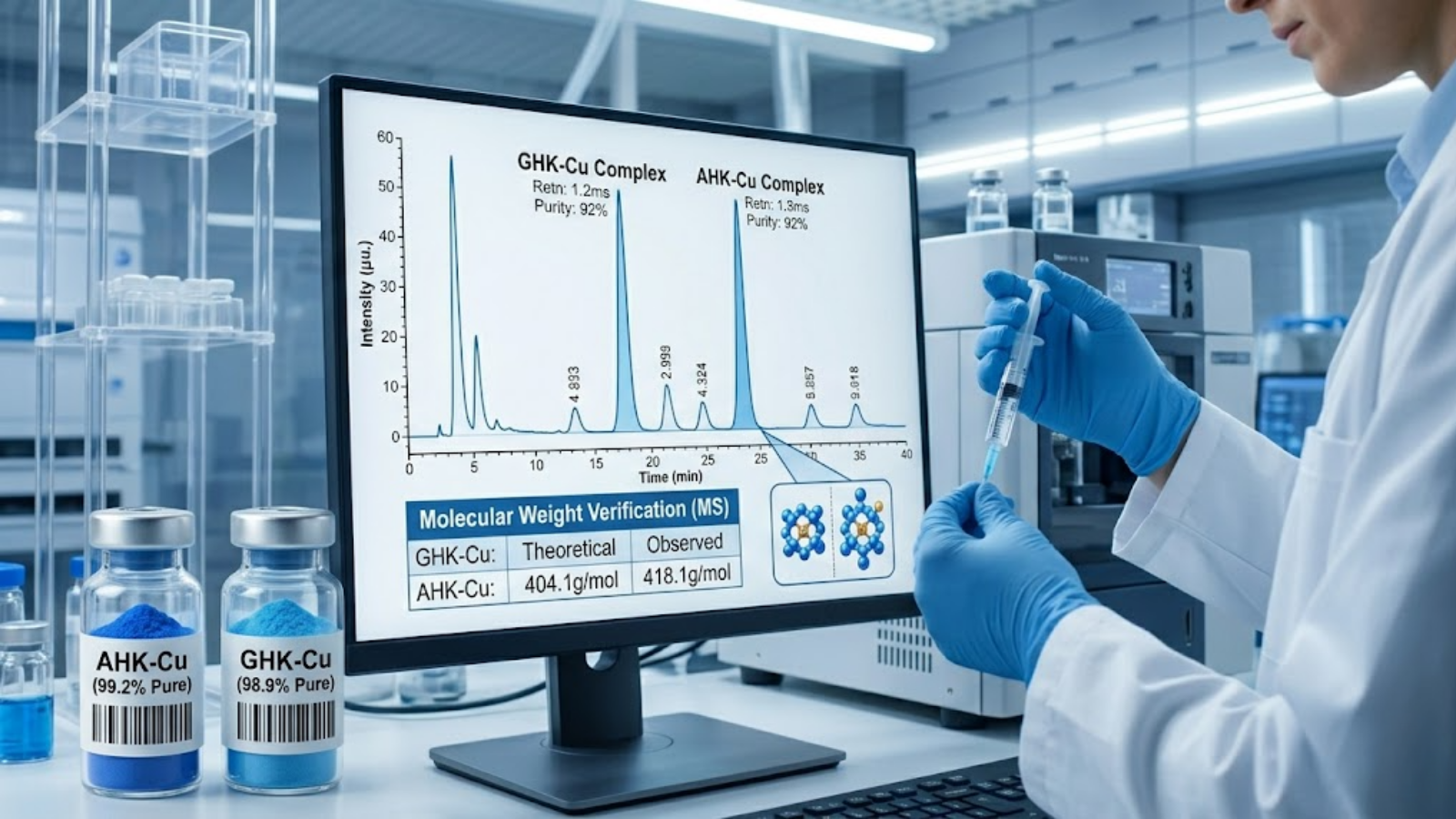
Fig 4: Clinical laboratory environment analyzing HPLC and Mass Spectrometry data for copper peptide purity verification.
Understanding HPLC and Mass Spectrometry Testing
Never procure peptides without demanding independent, third-party analytical testing. The gold standard for verifying peptide purity is High-Performance Liquid Chromatography (HPLC) coupled with Mass Spectrometry (MS).
- HPLC separates the molecular components, yielding a chromatogram with distinct peaks. A high-quality peptide will show a single, massive spike representing >99% purity, with virtually no secondary “noise” (which indicates leftover synthesis byproducts).
- Mass Spectrometry verifies the exact molecular weight of the compound, ensuring that the sequence synthesized is actually GHK-Cu (approx. 404 g/mol) or AHK-Cu (approx. 418 g/mol).
Red Flags in Peptide Purchasing: Identifying Fake or Degraded Peptides
Visual inspection offers immediate clues. Genuine lyophilized GHK-Cu and AHK-Cu powder possess a distinct, vibrant blue hue due to the oxidized copper ion. If the powder is white, it is likely just the naked peptide sequence without the complexed copper, rendering it practically useless for these specific protocols. If the powder is green or brown, it has likely oxidized heavily, been exposed to extreme heat, or degraded, and should be immediately discarded.
Bulk Synthesis vs. Retail Biohacking Supply
For B2B buyers sourcing raw powder for cosmetic formulation, attention must be paid to the salt form of the peptide. Peptides synthesized using Trifluoroacetic acid (TFA) leave behind TFA salts, which can be highly irritating to biological tissue in high concentrations. Premium wholesale manufacturers will perform an acetate conversion, yielding an acetate salt form of the peptide that is vastly superior for human in vivo and topical applications.
11. Frequently Asked Questions (FAQs)
What is the molecular weight difference between AHK-Cu and GHK-Cu?
The molecular weight of GHK-Cu is approximately 404 g/mol, while AHK-Cu is slightly heavier at approximately 418 g/mol. This difference is due to AHK-Cu replacing the hydrogen-based side chain of glycine with the heavier methyl group side chain of alanine.
Is AHK-Cu or GHK-Cu better for stimulating hair follicle growth?
AHK-Cu is clinically superior for stimulating hair follicle growth. While GHK-Cu is excellent for systemic tissue repair, the alanine substitution in AHK-Cu gives it a specific, targeted binding affinity for dermal papilla cells in the scalp, making it highly effective at elongating the hair growth cycle and preventing follicular miniaturization.
How do you store lyophilized GHK-Cu vs AHK-Cu for maximum stability?
Both peptides follow identical storage protocols. Unreconstituted, lyophilized powder should be stored in a freezer at $-20^\circ\text{C}$ for long-term stability (up to 24 months). Once reconstituted with bacteriostatic water or formulated into a serum, they must be kept refrigerated at $4^\circ\text{C}$ and used within 30 to 45 days to prevent degradation.
Can I mix AHK-Cu and GHK-Cu in the same syringe or topical serum?
While biochemically possible, it is not recommended to mix them in the same localized application. Because they share a copper ion complex, mixing them can cause them to compete for tissue absorption and localized receptor sites. It is far more optimal to use systemic GHK-Cu via injection and topical AHK-Cu applied directly to the scalp.
Does systemic GHK-Cu help with hair loss as well as topical AHK-Cu?
Systemic GHK-Cu does improve overall skin health and scalp blood flow, which indirectly supports hair health. However, for actively reversing alopecia or treating significant hair shedding, localized topical AHK-Cu is vastly more effective due to its direct stimulation of the Wnt/$\beta$-catenin pathway within the follicle.
12. Key Takeaways
To effectively implement these advanced biological tools, keep these core distinctions in mind:
- Summary of GHK-Cu Strengths (The Systemic Healer): The undisputed gold standard for global cellular regeneration. It excels at upregulating collagen synthesis, healing physical trauma, mitigating systemic inflammation, and initiating profound anti-aging effects across the entire body.
- Summary of AHK-Cu Strengths (The Hair & Scalp Specialist): A precision-engineered molecule designed for localized dermal targeting. It is unmatched in its ability to stimulate dermal fibroblasts, increase localized scalp vascularity (VEGF), and force hair follicles into the active growth phase.
- Final Verdict: When deciding between ahk cu vs ghk cu, let the tissue dictate the tool. Laboratory researchers and biohackers seeking comprehensive bodily repair and longevity should anchor their protocols with GHK-Cu. Those strictly battling hair thinning, scalp degradation, or seeking highly localized cosmetic serum formulations should direct their focus and budgets entirely toward AHK-Cu.