
5-Amino-1MQ vs. AOD 9604: Mechanisms, Protocols, and Metabolic Optimization

Disclaimer: The following information is for educational and informational purposes only. The compounds discussed are strictly for laboratory research use only and are not approved by the FDA for human consumption, diagnosis, treatment, or prevention of any disease. Always consult with a qualified medical professional or primary care physician before considering any advanced biological interventions.
5-Amino-1MQ vs. AOD 9604: Mechanisms, Protocols, and Metabolic Optimization
Table of Contents
- 1. Introduction & Quick Answer
- 2. Understanding 5-Amino-1MQ: The NNMT Inhibitor
- 3. Understanding AOD 9604: The Lipolytic Fragment
- 4. Direct Comparison: 5-Amino-1MQ vs AOD 9604
- 5. Clinical Data and Laboratory Research
- 6. Practical Application and Biohacking Protocols
- 7. Advanced Strategies: Synergy and Stacking
- 8. Safety Profiles, Side Effects, & Contraindications
- 9. Sourcing, Purity, and Laboratory Verification
- 10. Key Takeaways
- 11. Frequently Asked Questions (FAQ)
1. Introduction & Quick Answer
1.1. The New Era of Metabolic Peptides
The landscape of metabolic optimization and obesity management has fundamentally shifted. For decades, the primary pharmacological interventions relied heavily on central nervous system (CNS) stimulants, thermogenics, or brute-force caloric restriction, often yielding transient results accompanied by severe metabolic adaptation and rebound weight gain. Today, modern biochemistry allows researchers and advanced biohackers to target cellular metabolism at the molecular level. We are now capable of addressing the upstream epigenetic regulators of energy expenditure and the downstream signaling cascades of lipid mobilization.
Two of the most compelling compounds at the forefront of this biological revolution are 5-Amino-1MQ and AOD 9604. While both are highly sought after in research settings for their profound impact on body composition and fat mass reduction, their biochemical pathways could not be more distinct. Understanding the nuances between a small molecule enzyme inhibitor and a targeted peptide fragment is critical for optimizing any laboratory protocol or advanced metabolic biohacking framework.
1.2. Quick Answer
When evaluating 5 amino 1mq vs aod 960, the core difference is their mechanism of action. 5-Amino-1MQ is an NNMT inhibitor that amplifies systemic metabolic rate by increasing cellular NAD+ levels. In contrast, AOD 9604 is a synthetic growth hormone fragment that directly triggers lipolysis and prevents fat accumulation.
2. Understanding 5-Amino-1MQ: The NNMT Inhibitor
2.1. What is 5-Amino-1MQ?
Despite frequently being grouped with metabolic “peptides,” 5-Amino-1-methylquinolinium (5-Amino-1MQ) is technically not a peptide at all. It is a membrane-permeable, small-molecule quinoline derivative. Because it lacks the fragile peptide bonds formed by amino acid chains, it does not suffer from rapid enzymatic degradation in the gastrointestinal tract. This small-molecule structure grants it exceptional oral bioavailability, a rare and highly advantageous trait in a space dominated by subcutaneous injectables.
2.2. Mechanism of Action: Reversing Cellular Aging via NNMT
To understand 5-Amino-1MQ, one must first understand Nicotinamide N-methyltransferase (NNMT). NNMT is a cytosolic enzyme highly expressed in adipose (fat) tissue, particularly in states of obesity and metabolic dysfunction. Its primary biological function is to catalyze the transfer of a methyl group from S-adenosylmethionine (SAMe) to nicotinamide (NAM), producing 1-methylnicotinamide (1-MNA).
In simple terms, an overactive NNMT enzyme acts as a biochemical “sink.” It aggressively drains the cell’s pool of both SAMe (a critical methyl donor for gene transcription and epigenetic regulation) and nicotinamide, which is the foundational precursor required for the synthesis of Nicotinamide Adenine Dinucleotide (NAD+). By acting as a highly selective, competitive inhibitor of NNMT, 5-Amino-1MQ effectively plugs this sink. It halts the wasteful methylation of nicotinamide, dramatically shifting the intracellular environment.
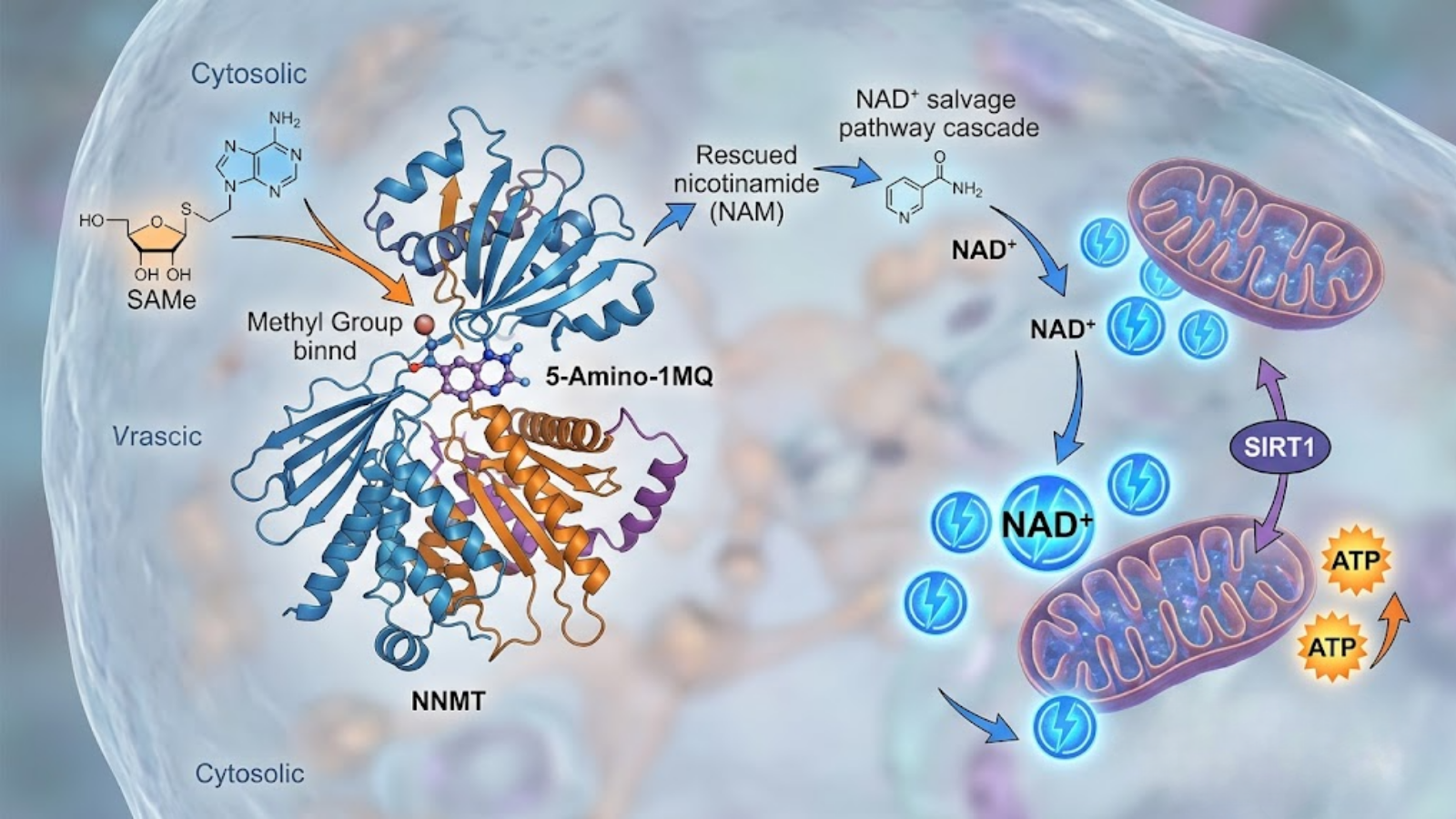
Image 1: The metabolic reprogramming driven by 5-Amino-1MQ. Visualizing the NNMT enzyme being inhibited, allowing rescued nicotinamide to fuel the NAD+ salvage pathway.
2.3. The NAD+ Salvage Pathway and Energy Expenditure
When NNMT is inhibited by 5-Amino-1MQ, the rescued nicotinamide is funneled directly into the NAD+ salvage pathway via the rate-limiting enzyme Nicotinamide Phosphoribosyltransferase (NAMPT). The result is a profound, systemic elevation in intracellular NAD+ levels without the need for exogenous precursors like NMN or NR.
NAD+ is the master coenzyme responsible for cellular respiration and mitochondrial energy production (ATP). Furthermore, elevated NAD+ directly activates the Sirtuin family of longevity proteins—specifically SIRT1. SIRT1 activation up-regulates mitochondrial biogenesis, enhances oxidative phosphorylation, and shifts the cellular phenotype from fat-storing to fat-burning. The entire basal metabolic rate of the organism is essentially “re-geared” to operate at a younger, highly efficient capacity.
2.4. Fat Cell Shrinkage and Adipocyte Hypertrophy
In clinical models, 5-Amino-1MQ targets white adipose tissue (WAT) directly. As metabolic dysfunction sets in, adipocytes (fat cells) do not necessarily multiply; they undergo hypertrophy, swelling with stored triglycerides. By increasing local metabolic rate and preventing de novo lipogenesis, 5-Amino-1MQ forces the adipocyte to metabolize its stored lipids. This results in the physical shrinking of white adipose tissue, improving localized insulin sensitivity and reducing systemic low-grade inflammation driven by oversized, dysfunctional fat cells.
3. Understanding AOD 9604: The Lipolytic Fragment
3.1. What is AOD 9604?
Anti-Obesity Drug 9604 (AOD 9604), structurally known as Tyrosine-hGH176-191, is a modified peptide fragment. It is a synthetic analog of the lipolytic domain of endogenous human growth hormone (hGH). Specifically, researchers isolated the C-terminal tail of the hGH molecule—amino acid residues 176 through 191—which is the precise sequence responsible for growth hormone’s renowned fat-burning effects. A tyrosine residue is added to the N-terminus to stabilize the molecule and prevent rapid enzymatic cleavage.
3.2. Mechanism of Action: Targeted Lipolysis
Unlike 5-Amino-1MQ, which alters upstream metabolic enzyme efficiency, AOD 9604 acts strictly downstream as a targeted lipid mobilizer. AOD 9604 binds to specific receptors on adipocytes to mimic the lipolytic cascade naturally triggered by systemic hGH release.
- Stimulation of Lipolysis: It up-regulates the activity of Hormone-Sensitive Lipase (HSL) and other key enzymes responsible for cleaving triglycerides into free fatty acids and glycerol, allowing them to be released into the bloodstream for beta-oxidation (energy use).
- Inhibition of Lipogenesis: It suppresses the activity of Acetyl-CoA Carboxylase (ACC), effectively blocking the biochemical pathway that converts circulating carbohydrates and fatty acids into new triglyceride stores within the fat cell.
3.3. The Safety Profile: Bypassing the hGH Pitfalls
The primary brilliance of AOD 9604 lies in what it does not do. Full-length human growth hormone (191 amino acids) acts on multiple somatic tissues, promoting cell division, organ growth, and severe alterations in carbohydrate metabolism. Chronic hGH administration frequently leads to insulin resistance, hyperglycemia, and the over-elevation of Insulin-Like Growth Factor 1 (IGF-1), which carries oncogenic risks over time.
Because AOD 9604 is merely a localized fragment containing only the lipolytic domain, it possesses zero growth-promoting properties. Clinical trials have consistently demonstrated that AOD 9604 does not interfere with insulin sensitivity, does not elevate fasting blood glucose, and does not trigger the systemic release of IGF-1. It is a precision tool engineered solely for fat mobilization.
4. Direct Comparison: 5 amino 1mq vs aod 960
To properly structure a research design or biohacking framework, we must analyze how these compounds operate in a side-by-side context. When looking at 5 amino 1mq vs aod 960, researchers are fundamentally comparing systemic cellular reprogramming against targeted receptor agonism.
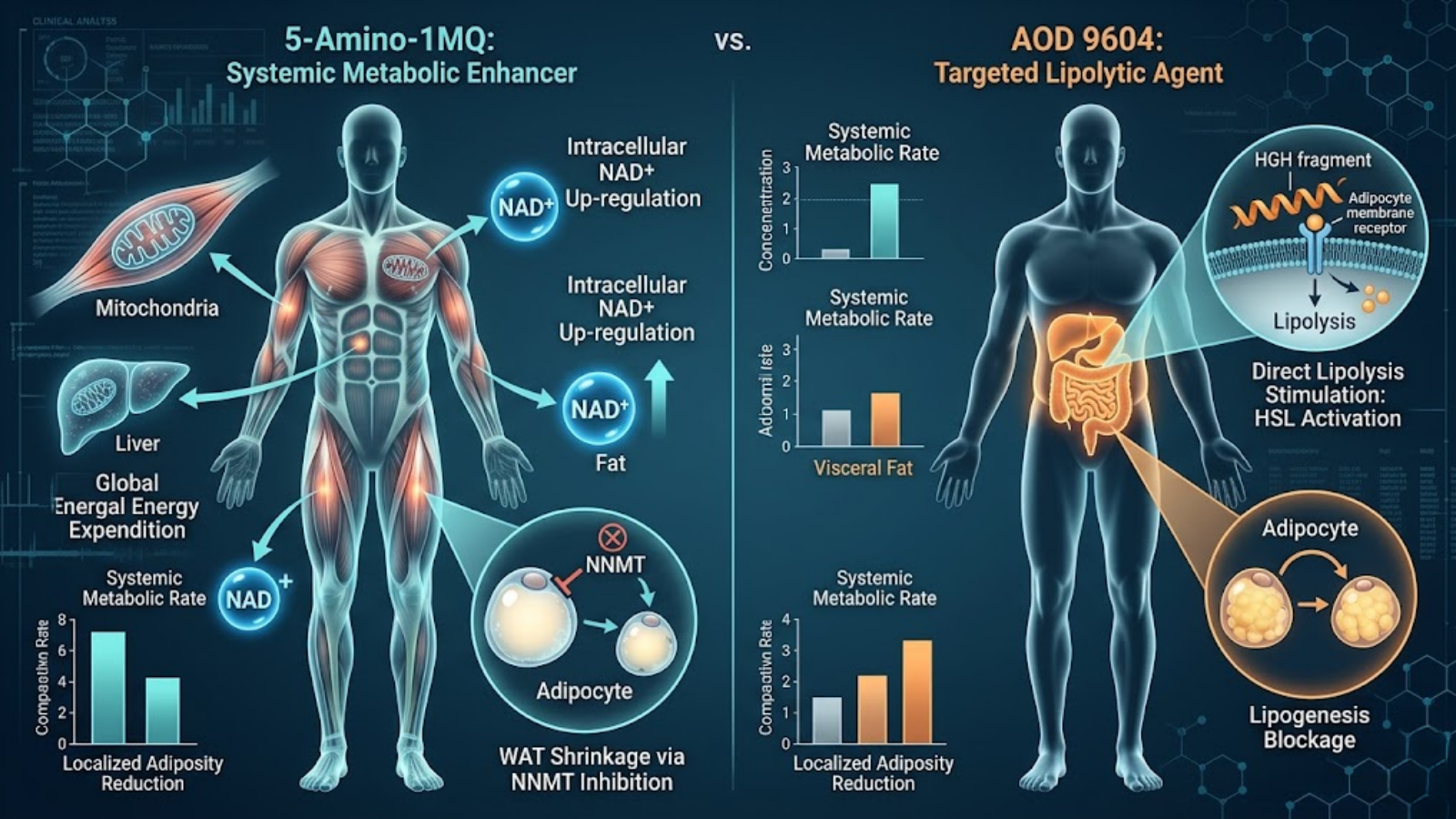
Image 2: Physiological targeting map contrasting the systemic NAD+ enhancement of 5-Amino-1MQ with the localized lipolysis activation of AOD 9604.
4.1. Fat Loss Mechanisms Compared
While both compounds ultimately reduce fat mass, their starting points dictate their application. 5-Amino-1MQ attacks obesity from the inside out. By restoring NAD+ levels, it increases the resting metabolic rate (RMR), essentially forcing the body to burn more calories simply to sustain baseline homeostasis. AOD 9604, conversely, attacks from the outside in. It signals the fat cells to release their stored energy into the bloodstream. Notably, if AOD 9604 frees up these fatty acids and the subject is not in a caloric deficit or actively utilizing energy, those lipids may simply be reabsorbed. Therefore, AOD 9604 heavily relies on concurrent physical activity or strict dietary control, whereas 5-Amino-1MQ creates its own metabolic demand.
4.2. Impact on Lean Muscle Mass
During a caloric deficit, preserving lean contractile tissue (muscle mass) is paramount. AOD 9604 has a mild muscle-sparing effect due to its heritage as an hGH fragment, but its primary action is isolated to adipose tissue. 5-Amino-1MQ exhibits a profound ergogenic advantage in this category. The surge in intracellular NAD+ and subsequent ATP production heavily benefits skeletal muscle. Researchers have noted increased muscle cross-sectional area and enhanced contractile force in animal models treated with 5-Amino-1MQ, making it highly valuable for preventing catabolism during aggressive fat loss phases.
4.3. Speed of Action and Bioavailability
As a small molecule, 5-Amino-1MQ is generally administered orally, traversing the gut-blood barrier easily. Metabolic shifts (increased thermogenesis, enhanced stamina) are often noted within days. AOD 9604, due to its peptide structure, requires subcutaneous injection to avoid destruction by stomach acids. The lipolytic effects of AOD 9604 are rapid on a cellular level, but visible body composition changes in human subjects typically require several weeks of consistent, daily dosing.
Comparison Matrix
| Feature / Characteristic | 5-Amino-1MQ | AOD 9604 |
|---|---|---|
| Compound Type | Small Molecule (Quinoline Derivative) | Peptide (Modified hGH Fragment 176-191) |
| Primary Target | NNMT Enzyme Inhibition | Adipocyte Receptors (Lipolytic Pathways) |
| Mechanism of Action | Increases systemic NAD+, boosts basal metabolic rate | Stimulates lipolysis, inhibits lipogenesis |
| Administration Route | Oral (Capsules/Liquid) | Subcutaneous Injection |
| Systemic vs. Local | Systemic Metabolic Enhancer | Localized Lipid Mobilizer |
| Impact on NAD+ | Significantly Increases | No Direct Impact |
| IGF-1 / Insulin Risk | None | None |
5. Clinical Data and Laboratory Research (B2B Focus)
For laboratory procurement specialists, wholesale synthesis providers, and clinical researchers, analyzing the raw data validating these compounds is critical for justifying clinical trial design.
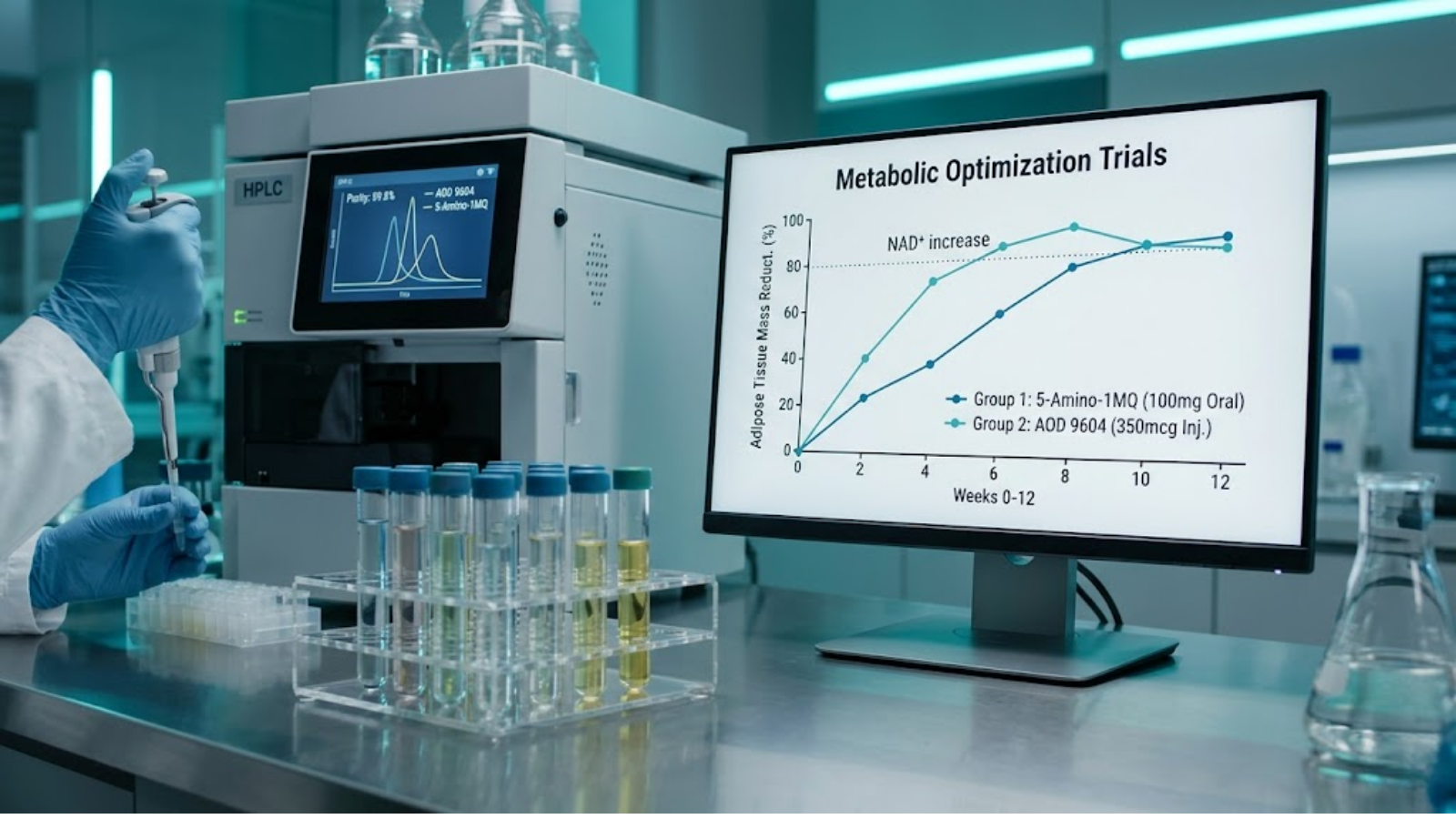
Image 3: B2B clinical context featuring an HPLC machine and conceptual data graphs comparing the metabolic optimization traits of 5-Amino-1MQ and AOD 9604.
5.1. In Vitro and Animal Models for 5-Amino-1MQ
The foundational research placing 5-Amino-1MQ on the map was conducted by researchers at the University of Texas Medical Branch (UTMB), led by Dr. Harshini Neelakantan. The objective was to find a bioavailable NNMT inhibitor to combat diet-induced obesity (DIO).
In a landmark study, researchers administered 5-Amino-1MQ to mice that had been fed a high-fat diet until they became obese. The results were staggering. The mice receiving the small molecule exhibited a 30% reduction in white adipose tissue mass and a 7% reduction in overall body weight over an 11-day period. Crucially, this occurred without any change to their food intake. The control and experimental groups ate the exact same amount of calories, proving that the weight loss was entirely driven by the restoration of cellular metabolism and increased resting energy expenditure. Furthermore, blood panels showed an aggregate drop in circulating cholesterol and lipogenesis markers.
5.2. Human Trials and Regulatory Status of AOD 9604
Unlike many novel research chemicals, AOD 9604 has a robust history of human clinical trials. Originally developed by Metabolic Pharmaceuticals in Australia during the late 1990s and early 2000s, it underwent rigorous Phase I, Phase II, and Phase IIb clinical trials aimed at securing FDA approval as an anti-obesity pharmaceutical.
Across several double-blind, placebo-controlled human trials involving hundreds of obese subjects, AOD 9604 successfully demonstrated high tolerability and excellent safety profiles. Subjects experienced accelerated fat loss, particularly around the visceral and abdominal regions, without any elevation in IGF-1, alterations to glucose tolerance, or negative cardiovascular outcomes. Although Metabolic Pharmaceuticals eventually ceased the expensive push for FDA drug approval due to financial structuring and mixed long-term efficacy markers in broad, uncontrolled populations, the safety data remains a cornerstone for B2B clinical confidence.
5.3. Bridging the Gap: Modern Biochemical Research
Today, the B2B synthesis and research focus has shifted toward combining these paradigms. Laboratories are currently investigating how modulating the epigenome (via NNMT inhibitors like 5-Amino-1MQ) alters the receptor density and responsiveness of adipocytes to direct lipolytic agents (like AOD 9604). This bidirectional research pipeline is setting the stage for the next generation of combination therapies targeting morbid obesity, lipodystrophy, and metabolic syndrome.
6. Practical Application and Biohacking Protocols (B2C Focus)
While B2B laboratory research focuses on in vitro and animal models, the advanced biohacking community has actively translated this data into pragmatic, real-world protocols. When optimizing body composition and metabolic health, the administration routes, dosing parameters, and timing drastically dictate the efficacy of both compounds.

Image 4: A professional medical flat lay illustrating the tools for a metabolic optimization protocol, including capsules, lyophilized vials, and administration equipment.
6.1. Administration Routes: Overcoming the Biological Barriers
The physical architecture of a molecule dictates its entry into the systemic circulation. Because 5-Amino-1MQ is a synthetic, membrane-permeable small molecule, it easily survives the highly acidic environment of the stomach and bypasses hepatic first-pass metabolism efficiently. Therefore, the standard and most effective route of administration for 5-Amino-1MQ is oral, typically via capsules.
Conversely, AOD 9604 is a peptide—a delicate chain of 15 amino acids. If ingested orally, proteolytic enzymes (like pepsin and trypsin) in the gastrointestinal tract would rapidly cleave the peptide bonds, reducing the molecule to useless, individual amino acids long before it could reach the bloodstream. Consequently, AOD 9604 must be administered via subcutaneous injection (typically into the abdominal adipose tissue) utilizing an insulin syringe. This ensures 100% bioavailability and rapid systemic distribution.
6.2. Dosing Strategies for 5-Amino-1MQ
In the context of applied biohacking, dosing for 5-Amino-1MQ is structured around sustaining steady-state NNMT inhibition to keep intracellular NAD+ levels elevated throughout the waking hours.
- Standard Dosage: Protocols generally range from 50 mg to 150 mg per day.
- Administration Timing: Because 5-Amino-1MQ dramatically ramps up mitochondrial ATP production, it possesses a mild stimulatory effect. Biohackers typically administer the dose early in the morning or approximately 60 minutes prior to a strenuous resistance training session.
- Frequency: To maintain stable blood serum concentrations, a daily dosage of 150 mg is often split into three 50 mg doses taken morning, noon, and early afternoon. Dosing too close to bedtime is strictly avoided, as the surge in cellular energy reliably causes acute insomnia.
6.3. Dosing Strategies for AOD 9604
AOD 9604 dosing frameworks are heavily reliant on manipulating the body’s natural insulin response. Insulin is the body’s primary storage hormone; when insulin is elevated, lipolysis (fat burning) is completely halted.
- Standard Dosage: Injectable protocols typically range from 250 mcg to 500 mcg per day.
- The Fasting Requirement: For AOD 9604 to successfully up-regulate Hormone-Sensitive Lipase (HSL) and trigger the release of free fatty acids, the subject must be in a fasted state with baseline insulin levels. Administering AOD 9604 after a carbohydrate-rich meal renders the peptide biologically inert regarding fat loss.
- Administration Timing: The most successful protocols involve a subcutaneous injection immediately upon waking, followed by 30 to 60 minutes of fasted, steady-state cardiovascular exercise (Zone 2 cardio). This creates a synergistic effect: the peptide mobilizes the fat into the bloodstream, and the cardiovascular demand oxidizes those lipids for fuel. Subjects generally wait at least two hours post-injection before consuming any macronutrients that would trigger an insulin spike.
6.4. Cycle Lengths and Washout Periods
Biological systems are highly adaptive, and down-regulation of receptor sites is a universal concern in advanced endocrinology.
- 5-Amino-1MQ Cycles: Due to the profound alteration of the NAD+ salvage pathway, cycles are typically capped at 4 to 8 weeks. Extending beyond this window without a washout period may lead to diminishing returns or disrupt endogenous methylation processes via SAMe depletion.
- AOD 9604 Cycles: Because AOD 9604 utilizes natural lipolytic pathways without altering systemic hormones like IGF-1, it is tolerated for much longer durations. Biohackers frequently run AOD 9604 for 8 to 12 weeks, followed by a 4-week cessation period.
| Protocol Parameter | 5-Amino-1MQ | AOD 9604 |
|---|---|---|
| Typical Daily Dose | 50 mg – 150 mg | 250 mcg – 500 mcg |
| Administration Route | Oral Capsule | Subcutaneous Injection |
| Optimal Timing | Morning / Pre-workout (Split doses) | Fasted Morning / Pre-fasted cardio |
| Dietary Requirement | None (though caloric deficit helps) | Strictly Fasted (Low Insulin) |
| Standard Cycle Length | 4 to 8 Weeks | 8 to 12 Weeks |
7. Advanced Strategies: Synergy and Stacking
When evaluating 5 amino 1mq vs aod 960, advanced practitioners often realize that these compounds do not have to be mutually exclusive. In fact, their differing mechanisms of action create a theoretical framework for profound biological synergy.
7.1. The Theoretical Synergy: Mobilization meets Oxidation
The primary limitation of AOD 9604 is that it only mobilizes fat. It breaks down triglycerides into free fatty acids (FFAs) and dumps them into the bloodstream. If the body’s resting metabolic rate (RMR) is low, or if the subject does not engage in physical activity, those FFAs will circulate and eventually be re-esterified and stored back in the adipocyte.
This is where 5-Amino-1MQ provides the ultimate biological assist. By inhibiting NNMT, 5-Amino-1MQ drives up intracellular NAD+ and drastically accelerates the basal metabolic rate. Therefore, when stacked, AOD 9604 forces the fat cells to release their stored energy, and the 5-Amino-1MQ-enhanced metabolism acts as the furnace that completely oxidizes those mobilized fatty acids, even at rest.
7.2. Protocol Example: The Metabolic Furnace Stack
An advanced biohacking protocol designed to leverage this synergy operates on strict circadian and metabolic timing:
- 06:00 AM (Fasted): 250 mcg to 300 mcg of AOD 9604 is administered subcutaneously.
- 06:15 AM: 50 mg of oral 5-Amino-1MQ is ingested to begin the up-regulation of the NAD+ salvage pathway.
- 06:30 AM – 07:15 AM: The subject engages in 45 minutes of Zone 2 cardiovascular training, utilizing the mobilized FFAs as the primary substrate for ATP production.
- 08:00 AM: First meal of the day (ideally high protein/low glycemic index to prolong the lipolytic window).
- 12:00 PM (Pre-Workout): A second 50 mg dose of 5-Amino-1MQ is taken prior to resistance training to maximize muscular contractile force and combat fatigue.
7.3. What to Avoid When Stacking
- The Insulin Trap: Consuming simple carbohydrates before or immediately after administering AOD 9604 will spike insulin, instantly shutting down Hormone-Sensitive Lipase and blocking the peptide’s efficacy.
- Over-Stimulation: While 5-Amino-1MQ is not a central nervous system stimulant like amphetamines or high-dose caffeine, the sheer volume of cellular ATP it produces can cause jitteriness. Stacking 5-Amino-1MQ with heavy doses of thermogenics (like Clenbuterol or Ephedrine) is highly discouraged, as it can lead to acute tachycardia, extreme dehydration, and severe muscle cramping.
8. Safety Profiles, Side Effects, & Contraindications
While both compounds present a superior safety profile compared to legacy weight loss drugs (such as Dinitrophenol/DNP or high-dose thyroid hormones like T3), they are not without physiological consequences.
8.1. Known Contraindications for 5-Amino-1MQ
Because 5-Amino-1MQ alters foundational biochemical pathways at the cellular level, its side effects are directly related to energy over-production.
- Insomnia and Sleep Architecture Disruption: If taken late in the day, the continuous production of ATP prevents the brain and body from entering the parasympathetic down-regulation necessary for deep REM and slow-wave sleep.
- Intramuscular Cramping: The rapid increase in muscular energy expenditure frequently leads to the rapid depletion of intracellular electrolytes (particularly magnesium, potassium, and taurine). Users often report severe muscle cramping unless hydration and electrolyte intake are aggressively managed.
- Methylation Concerns: While blocking NNMT rescues NAD+, long-term inhibition of natural methylation pathways remains understudied in humans. Theoretically, indefinite use could lead to an imbalance in S-adenosylmethionine (SAMe) dynamics, which is why strict cycle lengths are mandated.
8.2. Tolerability of AOD 9604
Because it is a localized hGH fragment that explicitly avoids the IGF-1 pathway, AOD 9604 is incredibly well-tolerated.
- Injection Site Reactions (ISR): The most common side effect is mild erythema (redness), pruritus (itching), or induration (a small, painless lump) at the subcutaneous injection site. This is typical of many lyophilized peptides reconstituted in bacteriostatic water.
- Flushing and Headaches: A small subset of researchers report transient flushing or mild tension headaches shortly after administration, likely due to the sudden mobilization of lipids into the bloodstream.
8.3. Long-term Risks and Unknowns
It is imperative to note the disparity in longitudinal data. AOD 9604 has been injected into thousands of human subjects during FDA-track clinical trials over several years, yielding a highly documented, reassuring safety profile. 5-Amino-1MQ, however, is a relatively novel research chemical. While in vitro and murine (mouse) models show remarkable safety and longevity benefits, there is a distinct lack of 10-year, peer-reviewed human clinical trials tracking the long-term ramifications of sustained NNMT inhibition.
9. Sourcing, Purity, and Laboratory Verification
The peptide and research chemical industry is fraught with quality control issues. Sourcing degraded, under-dosed, or completely counterfeit compounds is the single biggest point of failure for both B2B clinical trials and B2C biohacking protocols.
9.1. Why Third-Party Testing is Non-Negotiable
Whether procuring for a university lab or a private biohacking arsenal, every batch of 5-Amino-1MQ and AOD 9604 must be verified by an independent analytical laboratory.
- HPLC (High-Performance Liquid Chromatography): Determines the purity of the compound. For clinical application, purity should strictly exceed 99%. Anything less indicates the presence of synthesis byproducts, cleaved amino acids, or heavy metal contamination.
- Mass Spectrometry (Mass Spec): Verifies the molecular weight and structural identity of the compound, ensuring that the powder in the vial is exactly what the label claims it is.
9.2. B2B Procurement Protocols
For laboratory researchers, AOD 9604 should only be procured as a lyophilized (freeze-dried) powder stored in a sterile, vacuum-sealed vial. It must be reconstituted with bacteriostatic water immediately prior to use and kept refrigerated at 2°C to 8°C to prevent degradation. 5-Amino-1MQ is generally procured as a bulk Active Pharmaceutical Ingredient (API) powder and must be stored away from excessive heat and light.
9.3. B2C Red Flags to Avoid
The unregulated nature of the online research chemical market requires high vigilance.
- The “Oral AOD 9604” Scam: Many predatory supplement companies market oral AOD 9604 capsules, sprays, or sublingual drops. As established, AOD 9604 is a delicate peptide fragment that cannot survive gastric acid or first-pass metabolism. Any oral preparation of AOD 9604 is biologically useless and a waste of financial resources.
- Under-dosed 5-Amino-1MQ: Because 5-Amino-1MQ is highly complex and expensive to synthesize, illicit vendors frequently under-dose their capsules (e.g., selling capsules containing 10 mg while claiming 50 mg) or cut the raw powder with inert fillers like maltodextrin. Always demand verifiable, batch-specific Certificates of Analysis (COAs) from the vendor.
10. Key Takeaways
To effectively navigate the biological mechanisms and applications of these two compounds, refer to the following decision matrix:
- Distinct Pathways: 5-Amino-1MQ is an orally bioavailable small molecule that boosts the entire systemic basal metabolic rate by inhibiting the NNMT enzyme and increasing intracellular NAD+. AOD 9604 is an injectable peptide fragment that acts locally on fat cells to stimulate lipolysis and halt lipogenesis.
- Target Audiences: For individuals looking to reverse metabolic aging, increase muscular endurance, and create a systemic caloric deficit internally, 5-Amino-1MQ is superior. For individuals looking to aggressively target stubborn adipose tissue while utilizing strict fasting and cardio protocols, AOD 9604 is the precision tool of choice.
- Synergistic Potential: When stacked responsibly, AOD 9604 acts as the “mobilizer” of fat stores, while the elevated NAD+ from 5-Amino-1MQ acts as the “oxidizer,” effectively incinerating the mobilized lipids.
- Safety Paradigms: AOD 9604 benefits from extensive human clinical trial data proving its safety regarding insulin and IGF-1 pathways. 5-Amino-1MQ requires more cautious cycling due to its profound impact on cellular ATP production and endogenous methylation processes.
- Administration Truths: Never purchase oral AOD 9604, as peptides are destroyed in the gut. Always source both compounds from vendors providing third-party HPLC and Mass Spectrometry purity testing.
11. Frequently Asked Questions (FAQ)
Which is better for burning stubborn belly fat: 5-Amino-1MQ or AOD 9604?
When deciding between 5 amino 1mq vs aod 960 for targeted, stubborn adiposity, AOD 9604 is generally the preferred choice. Because AOD 9604 binds directly to localized fat cells to trigger Hormone-Sensitive Lipase, it is highly effective at mobilizing stubborn lipid stores, provided the user remains in a strict fasted state during administration.
Can AOD 9604 be taken orally like 5-Amino-1MQ?
No. AOD 9604 is a sequence of 15 amino acids connected by fragile peptide bonds. If swallowed, gastric acids and proteolytic enzymes will destroy the molecule before it can enter the bloodstream. It must be injected subcutaneously. 5-Amino-1MQ is a small molecule designed to survive the digestive tract, allowing for highly effective oral administration.
Do I need to be in a caloric deficit for these to work?
Yes, a caloric deficit is scientifically required for sustained fat loss. While 5-Amino-1MQ actively increases your resting metabolic rate (essentially creating a larger deficit internally), and AOD 9604 mobilizes fat into the bloodstream, consuming excess calories will simply result in the body re-storing the mobilized lipids as new fat tissue.
How long does a standard cycle last for both compounds?
In laboratory and advanced biohacking settings, a standard cycle of 5-Amino-1MQ typically lasts between 4 to 8 weeks to prevent downstream disruptions in natural methylation pathways. AOD 9604, possessing a milder systemic footprint, is frequently cycled for 8 to 12 weeks at a time.
Can women use 5-Amino-1MQ and AOD 9604 safely?
Yes, both compounds are frequently utilized by women in research and clinical models. Because neither compound is an androgenic steroid (they do not interact with testosterone receptors), there is zero risk of virilization, voice deepening, or other masculinizing side effects typically associated with anabolic performance-enhancing drugs. As always, rigorous attention to dosage and medical supervision is advised.